Same-Day Service Available!

Best Way to Remove Odors From a Fabric Couch

Why fabric couch odors happen fast in Nashville homes

Beige_upholstery_in_living_room

Upholstery cleaning in Nashville, Tennessee gets real the moment your couch starts holding onto odors that won’t leave, even after you spray something “fresh.” We hear it from families all over town: the couch smells like pets, old food, sweat, smoke, damp laundry, or that mystery funk that shows up after a rainy week. A fabric couch is basically a giant soft filter. It traps what floats in the air, plus whatever gets pressed into it during everyday life.

Odors don’t sit only on the surface. They sink into fibers, seams, cushion inserts, and sometimes even the decking (the fabric under the cushions). In addition, spills can soak deeper than you think. A small coffee drip can reach foam. A pet accident can seep into padding. Meanwhile, humidity can make mild odors smell stronger because moisture helps odor molecules hang around longer.

Another common issue is “cover-up cleaning.” Many sprays mask smells instead of removing what caused them. As a result, the odor fades for a few hours, then comes right back. In some cases, too much spray leaves its own residue, which can attract more soil and make the couch smell worse over time.

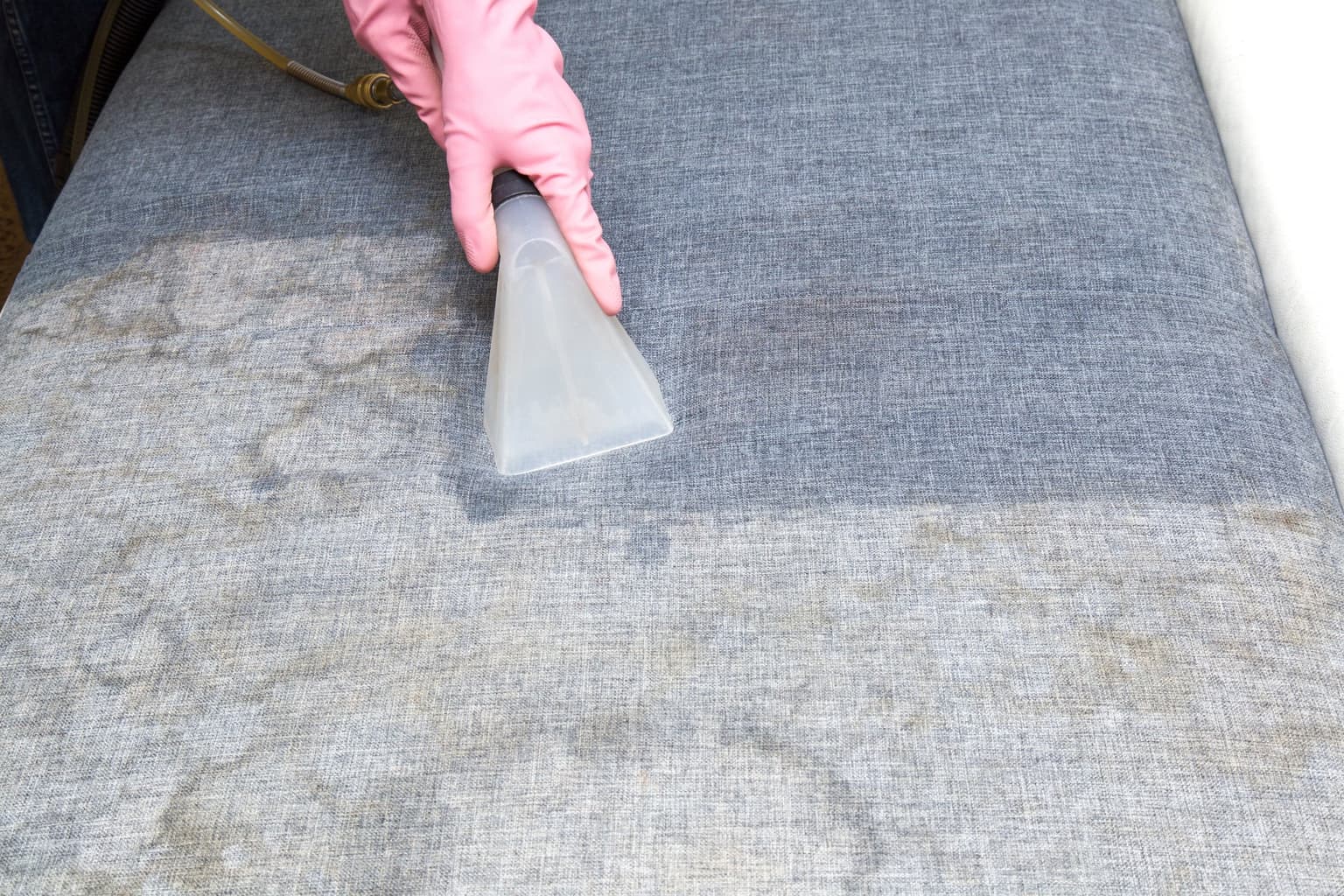
The good news is that most couch odors can be improved a lot with the right process. The trick is to work in layers: remove dry soil first, treat the source next, use moisture carefully, and dry fast. That’s the same mindset we use for upholstery cleaning when customers want results that feel truly clean, not just temporarily scented.

Our local, family-safe approach to getting your couch fresh again

Here in Nashville, Tennessee, our team has spent more than 30 years helping families get their homes cleaner and more comfortable with methods that focus on low residue and practical, quick-drying results. We care about what works in real life, because most households don’t have time for a couch that stays damp all day or cleaners that leave sticky buildup.

This guide walks you through a 10-step system for removing odors from a fabric couch safely. You’ll learn what’s safe vs what’s risky, how to avoid water stains and musty smells, and when it’s smarter to call in professional upholstery cleaning instead of experimenting with stronger chemicals.

Keep reading, because once you understand where couch odors actually live, you can remove them with confidence and keep them from coming back.

Step-by-Step Process: Best Way to Remove Odors From a Fabric Couch

Step 1: Read the care code and identify what you’re working with

Photorealistic_midshot_of_a_microfiber_cloth_light

Before you do anything, check the couch tag. Most fabric couches have a cleaning code like W, S, WS, or X. This matters because the wrong method can spread odors, set stains, or leave rings.

What’s safe:

  • W: water-based upholstery cleaner used lightly and evenly
  • S: solvent-based cleaner only (no water)
  • WS: either water-based or solvent-based methods, still used carefully
  • X: vacuum only, no liquids

What’s risky:

  • Ignoring the tag and using a random cleaner
  • Saturating cushions when the material can’t handle it
  • Using a strong deodorizer without testing first

If you can’t find the tag, treat the couch as sensitive: minimal moisture, gentle products, and always test in a hidden spot.

Step 2: Find the odor source first (because odors don’t “float,” they cling)

Odor removal gets easier when you locate the source. In Nashville homes, the usual suspects are:

  • Cushion seams where crumbs and oils collect
  • Armrests where body oils build up
  • The crease where the back meets the seat
  • Under cushions, where spills and pet hair hide
  • Throw pillows that absorb cooking and smoke odors

Do a quick inspection:

  • Remove cushions and sniff each cushion insert and cover
  • Smell the base fabric under the cushions
  • Check for dampness, discoloration, or sticky spots
  • If the couch smells stronger underneath, the source is likely embedded, not just on top

If you find a specific spot that smells sour, urine-like, or musty, that’s your priority area. Meanwhile, if the odor is “overall,” you’ll treat the whole couch evenly to prevent water rings.

Step 3: Dry soil removal: vacuum like you mean it

This step is the backbone of upholstery cleaning. Odors often attach to dust, dander, crumbs, and hair. If you wet-clean before vacuuming, you can turn dry soil into a smelly paste.

Do it this way:

  • Use an upholstery tool with steady, overlapping passes
  • Get into seams with a crevice tool
  • Vacuum under cushions and along the frame edges
  • Flip cushions and vacuum both sides
  • If you have a brush attachment, use gentle strokes to lift fibers while you vacuum

What’s safe:

  • Slow passes and seam focus
  • Vacuuming before any powder or spray

What’s risky:

  • Speed-vacuuming and missing seams
  • Skipping under-cushion areas where odor hides

If your couch has loose covers, remove them and vacuum both the cover and the cushion insert lightly.

Step 4: Use baking soda the right way for general odor absorption

Baking soda can help with mild-to-moderate “general” odors, especially when the smell is stale or everyday. It works best when you apply it evenly, let it sit, then remove it completely.

How we recommend doing it:

  1. Lightly sprinkle baking soda across the fabric, focusing on seat cushions and arms.
  2. Work it in gently with a soft brush, using light pressure.
  3. Let it sit for at least a few hours. Overnight is even better for stronger odors.
  4. Vacuum thoroughly with an upholstery attachment until the powder is gone.

What’s safe:

  • Light, even application
  • Plenty of dwell time
  • Thorough removal with a vacuum

What’s risky:

  • Piling it on thick and leaving residue in the fabric
  • Rubbing aggressively and damaging fibers
  • Using it on delicate fabrics without a test spot

If you’re doing upholstery cleaning because the couch smells “all over,” baking soda is a good first layer. However, it won’t fully fix odors caused by deep liquid contamination. You’ll handle those in the next steps.

Step 5: Spot-treat the source with the right odor approach (don’t just spray perfume)

Hands_blotting_couch_with_towel

Different odors need different solutions. This is where many DIY attempts go wrong, because people use one spray for everything.

A simple guide:

  • Food, body oils, and general grime odors: a fabric-safe upholstery cleaner used lightly, then blotted and dried
  • Pet accidents or organic odors: an enzyme-based cleaner designed for upholstery (test first and use carefully)
  • Musty/damp odors: focus on drying and gentle cleaning, not heavy soaking

How to spot-treat safely:

  1. Test your product in a hidden area first.
  2. Apply cleaner to a clean white cloth, not directly to the couch, unless the label specifically says direct spray is safe.
  3. Blot from the outside in to avoid spreading the odor zone.
  4. Follow with a lightly damp cloth with plain water if the product requires a rinse step.
  5. Blot dry immediately.

What’s safe:

  • Blotting, not scrubbing
  • Minimal moisture and immediate drying
  • Treating the specific source area first

What’s risky:

  • Over-wetting foam or batting (this can create lingering musty smells)
  • Mixing cleaners (especially bleach, ammonia, or strong household degreasers)
  • Scrubbing hard and roughing up fabric texture

If odors keep returning after careful spot treatment, the odor source may be deeper in the cushion insert or padding. That’s the point where professional upholstery cleaning is often the safer option, because we can clean deeper while controlling moisture and dry time. If you want to see how we handle couch and sectional cleaning locally, you can read more here and if you’d rather book a visit that fits your week, schedule online today.

Step 6: Do an even, low-moisture clean to prevent rings and “half-clean” smells

After vacuuming and spot-treating, the next goal is to clean the cushion faces evenly. Odors often linger because only one spot got treated, while the rest of the fabric still holds oils, dust, and stale buildup. However, soaking the couch is risky because damp foam can hold musty smells.

Here’s the safer upholstery cleaning method:

  • Lightly mist your upholstery-safe cleaner onto a clean microfiber cloth or onto the fabric from a distance (only if the label allows it).
  • Work one cushion face at a time.
  • Wipe with gentle, consistent strokes, and keep your moisture level even across the whole cushion face.
  • Immediately blot with a dry, clean towel to lift moisture and odor-causing residue.

What’s safe:

  • Light, even moisture across the cushion face
  • Blotting often to lift soil and product
  • Working in small sections for control

What’s risky:

  • Saturating one small spot (this causes rings)
  • Over-spraying fabric until it feels wet to the touch
  • Using harsh degreasers not meant for upholstery

If the couch odor is widespread, cleaning evenly is often the step that finally makes the couch smell “fresh” instead of “fresh in one corner.”

Step 7: Deodorize without leaving residue (and without creating a musty couch)

A lot of odor problems get worse because people add too many deodorizing layers. Sprays can leave residue, and residue can hold onto grime and create a “stale perfume” smell later. For upholstery cleaning, we prefer deodorizing steps that either absorb odors or help remove them during cleaning.

Two safer options:

  • Absorption approach: baking soda (light, even, vacuumed completely)
  • Removal approach: a fabric-safe upholstery deodorizer applied lightly, then blotted and dried (use only if your fabric and cleaning code allow it)

What’s safe:

  • Using the smallest amount needed
  • Letting the product dwell briefly if the directions say to, then removing it through blotting or vacuuming
  • Keeping airflow moving during and after deodorizing

What’s risky:

  • Spraying “until it smells good”
  • Mixing deodorizers with other cleaners
  • Leaving dampness behind (this can turn into a musty odor)

If you want a simple, proven approach for everyday couch odors, HGTV also notes baking soda as a practical odor neutralizer for couches when used with testing and vacuuming.

Step 8: Don’t forget the hidden odor zones: cushion inserts, under-cushion fabric, and pillows

Crevice_tool_vacuuming_couch_seams

In Nashville homes, we often find that the couch smells stronger under the cushions than on top. That’s a big clue. Odors live in hidden zones because crumbs, pet hair, and spills fall into seams and settle underneath.

Do this checklist:

  • Vacuum under cushions again after cleaning
  • Wipe the under-cushion decking fabric lightly if the tag allows
  • Smell each cushion insert (the foam inside) and each throw pillow
  • If inserts smell stronger than covers, the odor source may be inside the cushion, not just on the surface

What’s safe:

  • Cleaning and deodorizing covers and surface fabric within the care-code limits
  • Airing out removable inserts if they are not wet and conditions allow

What’s risky:

  • Saturating cushion inserts (foam can trap moisture and smell musty)
  • Trying to “wash” inserts without knowing the material and care instructions

If cushion inserts are the odor source, this is where DIY attempts can get frustrating. Professional upholstery cleaning can often address odors more effectively because we can clean deeper while controlling moisture and dry time.

Step 9: Dry fast on purpose (quick-drying mindset prevents the “wet dog” smell)

Odor removal is not just about cleaning. Drying is part of the job. A couch that stays damp can develop a lingering musty smell, even if you removed the original odor source.

Use this quick-drying plan:

  • Turn on ceiling fans and nearby fans to move air across the couch
  • If weather is humid, run air conditioning or a dehumidifier
  • Separate cushions and stand them on edge (if possible) so air hits more surface area
  • Rotate cushions halfway through drying
  • Avoid sitting on the couch until it’s dry to the touch

What’s safe:

  • Air movement and reduced humidity
  • Blotting moisture out before it has time to settle deeper

What’s risky:

  • Closing up the room with no airflow
  • Adding more spray to “freshen” while it’s still damp
  • Putting wet cushions back into place too soon

A quick-drying finish is one of the most overlooked parts of upholstery cleaning, and it’s often what stops odors from bouncing back the next day.

Step 10: Prevent the odor from returning with a simple “first 72 hours” routine

After you remove odors, the next goal is to keep them from returning. The first few days matter because fabric is more likely to re-absorb smells during normal use.

For the next 72 hours:

  • Keep food off the couch if possible
  • Use a washable throw blanket on the most-used seat
  • Vacuum lightly on day 2 or day 3 to lift any loosened particles
  • If pets sleep on the couch, use a dedicated pet cover that you can wash weekly

If the couch odor comes back quickly even after careful upholstery cleaning, the source is usually deeper than the surface fabric. At that point, scheduling a professional clean is often the safer option than trying stronger products that can damage fabric or create water stains. You can read more about our local upholstery cleaning here and lock in an appointment today.

Benefits of Upholstery Cleaning

A fresher-feeling home without relying on heavy fragrance

When a couch holds odors, the entire room can feel off. Upholstery cleaning helps remove what causes the smell instead of covering it up. As a result, the space feels cleaner and more comfortable, even without strong sprays or heavy scents. In Nashville, Tennessee, we see this especially in open-concept homes where the living room connects to the kitchen. Cooking aromas, pet smells, and everyday life can all settle into upholstery.

A clean couch also helps the room feel more “reset.” People often tell us the living room feels brighter and more inviting once the stale odor is gone. That difference matters because the couch is where families relax every day.

Better comfort and a cleaner feel on the fabric

Odors often travel with oils and grime, not just air. Armrests, headrest zones, and seat cushions can build up body oils and fine soil that make fabric feel tacky or dull. Upholstery cleaning removes that buildup so the fabric feels softer and more pleasant to sit on.

In addition, when you remove embedded dust and crumbs, you reduce that gritty feel in seams and cushion edges. That’s a comfort upgrade that people notice immediately, especially on sectionals that get heavy daily use.

A more attractive couch that looks cared for, not worn down

Odors rarely come alone. The same buildup that creates smells can also make fabric look darker in high-use spots. Upholstery cleaning helps even out appearance by lifting soil from the surface fibers. As a result, you often see:

  • Cleaner-looking cushion faces
  • Less visible “shadowing” where people sit most
  • A more uniform look across the whole couch

This is especially helpful if you have guests coming over or you’re trying to keep your home feeling tidy without replacing furniture. A couch can look and smell older than it really is if it holds onto odor and grime.

Long-term maintenance that protects your investment

A quality couch is not cheap. Regular upholstery cleaning helps you maintain it, which can help the couch stay nicer for longer. Odor-causing spills and oils can break down fabric over time, and crumbs and grit can grind into seams. Meanwhile, repeated spray-and-forget deodorizing can leave residue that attracts soil.

A smarter routine reduces wear:

  • Vacuuming regularly
  • Handling small odors early with gentle, fabric-safe steps
  • Scheduling periodic deeper upholstery cleaning when needed

This approach protects both comfort and appearance. It also makes day-to-day upkeep faster because fresh fabric does not grab and hold new odors as easily.

Preventing repeat odor problems, especially with pets and busy schedules

If you’ve ever removed an odor only to have it return a week later, you’re not alone. Repeat odors often happen because the source was deeper than the surface, or because drying was too slow and created mustiness.

Upholstery cleaning prevents repeat problems by focusing on:

  • Dry soil removal before moisture touches the fabric
  • Source treatment instead of surface fragrance
  • Low-moisture cleaning that avoids soaking inserts
  • Faster drying to prevent damp smells

In Nashville, Tennessee, we often see repeat odor issues during humid stretches or rainy weeks because fabric holds moisture longer. A quick-drying mindset helps prevent that “clean but damp” smell that can show up the next morning.

A cleaner overall living space, especially in high-traffic Nashville households

A couch is one of the most-used surfaces in most homes. As a result, upholstery cleaning supports the entire home’s feel. When the couch smells better, you’re less likely to rely on air fresheners that fade quickly. You also feel more confident inviting people over, letting kids lounge, or simply enjoying the living room.

Complementary services can help too when odors are part of a bigger issue. For example, if you notice lingering smells in carpeted rooms near the couch, or if pet odors seem to live in multiple soft surfaces, pairing upholstery cleaning with carpet cleaning can make the whole space feel more consistent. The key is to keep everything residue-free and properly dried, because that’s what helps the freshness last.

Pro Tips & Home Care Guide

Tip 1: Remove the odor source before you deodorize, or the smell will boomerang

A fabric couch can hold odors for one simple reason: something is still living in the fibers. In Nashville, Tennessee, we see it most often with crumbs in seams, body oils on arms and headrest zones, pet hair packed under cushions, and small spills that soaked deeper than expected. Deodorizer only masks that for a short time.

For upholstery cleaning at home, use this odor-first checklist:

  • Vacuum slowly with an upholstery tool and a crevice tool, especially along seams and under cushions.
  • Spot-clean the smelliest zones first instead of spraying the whole couch.
  • Blot, don’t scrub, because scrubbing can push odor deeper and rough up the fabric.

If the couch smells “clean for a day” then turns stale again, that’s usually a sign the odor source is in cushion inserts or under-cushion fabric. In that case, keep your moisture low and focus on extraction steps like blotting and pad swapping, not heavy wetting. Odor removal is a lift-and-remove job, not a soak-and-hope job.

Tip 2: Use the smallest amount of product that actually works

More cleaner rarely means better upholstery cleaning. Too much product can leave residue, and residue loves to hold onto soil and odor. As a result, couches can start smelling like “old perfume” mixed with grime, especially in the main seat where everyone sits.

A safer routine looks like this:

  • Apply product to a cloth first when possible.
  • Work one cushion face at a time with light, even moisture.
  • Blot with a clean towel after each small section.
  • Finish with a quick dry pass using a clean microfiber towel.

If you prefer baking soda, keep it light. Apply a thin layer, let it sit long enough to absorb odors, then vacuum until it’s fully gone. Heavy layers that linger in the fabric can create their own stale smell later. Meanwhile, avoid stacking products like baking soda plus deodorizing spray plus perfumed fabric refreshers. One method at a time keeps results cleaner.

Tip 3: Control moisture like it’s part of the cleaning, because it is

In Nashville, Tennessee, humidity can turn a slightly damp couch into a musty couch. That’s why drying is not optional. Upholstery cleaning works best when you clean with low moisture and dry quickly on purpose.

A simple quick-drying plan:

  • Turn on ceiling fans and a standing fan aimed across the couch, not directly into one spot.
  • Run air conditioning or a dehumidifier if the air feels sticky.
  • Separate cushions and stand them on edge so air hits more surface area.
  • Rotate cushions halfway through drying.

One mistake we see a lot is reassembling the couch too soon. When cushions go back in place while damp, airflow drops, and odors can linger. Give it time. A couch that dries evenly is far less likely to develop that “wet towel” smell the next day.

If you ever get into a situation where you used too much moisture, don’t add more product to fix the smell. Instead, blot aggressively with dry towels, increase airflow, and let drying do its job.

Tip 4: Be careful with disinfecting sprays, strong chemicals, and DIY mixes

A lot of odor advice online pushes strong disinfectants or harsh DIY combinations. For upholstery cleaning, we recommend a more cautious approach because upholstery fabric, dyes, and cushion materials can react unpredictably.

What’s safer:

  • Upholstery-safe cleaners designed for fabric (and matched to the couch’s care code)
  • Enzyme cleaners used carefully and tested first for organic odors
  • Simple absorption steps like baking soda (vacuumed fully)

What’s riskier:

  • Bleach-based products on fabric
  • High-alcohol sprays that can discolor or stiffen fibers
  • Mixing chemicals (never mix bleach and ammonia, and don’t combine random cleaners)

If you want a conservative, authority-backed baseline for safer product use at home, the EPA’s guidance on choosing safer disinfectants and using them correctly is a helpful reference when you’re deciding what belongs on household surfaces and what may be too harsh for porous materials like fabric.

The practical takeaway is simple: choose a product meant for the surface, use it exactly as directed, and don’t overapply. Fabric couches are porous. Overuse can lead to residue, stiffness, and lingering chemical smells that feel worse than the original odor.

Tip 5: Make odor prevention easy with weekly habits and “couch rules” that feel realistic

The best upholstery cleaning plan is the one that reduces how often odors build up in the first place. You don’t need strict rules that make the couch feel off-limits. You just need a few habits that work for busy Nashville households.

Weekly maintenance that makes a big difference:

  • Vacuum the couch once per week, especially seams and under cushions.
  • Wash throw blankets and pillow covers weekly or every other week if pets use the couch.
  • Rotate seat cushions so one spot doesn’t collect all the oils and odor.
  • Spot-clean small spills quickly, then blot dry and increase airflow.

If pets lounge on the couch, use a washable cover on their favorite spot. If kids snack on the couch, keep a small handheld vacuum nearby. Those two changes alone reduce crumbs and oils that cause long-term smells.

If you notice odors returning quickly even with good habits, a deeper upholstery cleaning is often the smartest next step because it removes embedded buildup instead of making you repeat DIY efforts every weekend. When you want to stop the cycle, scheduling is easy, book now.

The Safe-Dry Difference

We built our approach around family-safe, soap-free cleaning

Here in Nashville, Tennessee, we take upholstery cleaning seriously because furniture is where families live. Our broader cleaning philosophy started with a simple belief: professional cleaning should be safe for your home, your family, and your pets, without relying on harsh chemicals. We stick to methods that are hypoallergenic and soap-free, because residue is one of the biggest reasons fabrics re-soil and odors return.

When we remove odors from a fabric couch, we don’t aim for “covered up.” We aim for “actually removed.” That’s why we focus on lifting grime, oils, and odor sources out of the fibers without leaving behind a sticky layer.

Our technicians are trained, uniformed, and focused on residue-free results

Couch odor problems usually come from a mix of things: embedded debris, body oils, pet odors, and small spills that went deeper than the surface. Our technicians come in with a plan, not guesses. We pre-check fabric type, target the odor source areas, and clean in a way that keeps moisture controlled and results consistent. We also train with the goal of exceeding expectations and leaving your fabrics clean, dry, and residue-free.

Low-moisture thinking that helps couches dry faster and smell fresher

Odor removal gets tricky when a couch stays damp. Damp cushions can hold onto musty smells and make the whole room feel stale. That’s why we lean into a low-moisture approach that reduces how much water gets left behind compared to traditional methods, with a focus on faster drying and practical convenience for everyday homes.

For upholstery cleaning, this matters because:

  • We reduce the chance of moisture lingering deep in cushion materials.
  • We help avoid the “wet towel” smell that can appear after overly-wet DIY cleaning.
  • We keep fabric feeling cleaner, not crunchy or coated.

Carbonation-based cleaning that helps lift grime without heavy soaps

When we clean upholstery, we use safe, green cleaning solutions and can use carbonation-based cleaning to help lift dirt and grime without leaving soap residue behind. This is a big deal for odor control, because residue can trap new odors faster.

A couch that feels truly clean tends to stay fresher longer. Meanwhile, a couch that feels slightly sticky or coated tends to grab dust, oils, and odor molecules quickly. Our goal is to help you avoid that cycle.

A satisfaction guarantee and a customer-first mindset

We’ve been in the carpet, rug, and upholstery cleaning business for over 30 years, and we’ve seen just about every furniture odor scenario out there. We stand behind our work with a 100% satisfaction guarantee, and we take feedback seriously because we want you to feel confident recommending us to friends and family.

If your couch odor keeps returning, if you’re worried about water stains, or if you’d rather not experiment with different products, we’re ready to help with professional upholstery cleaning that’s designed to be family-safe, low-residue, and quick-drying. You can learn more about our local service here.

FAQs

1) Why does my fabric couch still smell after I cleaned it in Nashville, Tennessee?

Most of the time, the odor is still there because the source was never fully removed. Upholstery cleaning works best when you start with dry soil removal, then treat the odor source, then clean evenly and dry quickly. If you skipped vacuuming seams and under-cushion areas, crumbs, pet hair, and oils can keep feeding the smell. In addition, many DIY deodorizers only mask odors. They smell good for a few hours, then the underlying odor returns. Another common cause is too much moisture. When cushion foam gets damp and stays damp, it can develop a stale, musty smell that feels like the odor “came back.” For Nashville, Tennessee homes, airflow matters because humidity can slow drying. A safer reset is a low-moisture clean with proper blotting and fan-driven drying. If the couch smells stronger underneath the cushions or inside inserts, professional upholstery cleaning is often the smartest next step.

2) What is the safest way to remove pet odors from a fabric couch in Nashville, Tennessee?

Start with the least risky steps: vacuum thoroughly, then treat the odor source with the right product for organic odors, used carefully and tested first. Pet odors often come from one or two spots that soaked deeper than the fabric, especially near cushion seams and the couch base under cushions. Upholstery cleaning works best when you blot, not scrub, because scrubbing can push odor deeper. Use an enzyme-based cleaner only if your couch care code allows it and you’ve tested it in a hidden area for color safety. Apply lightly, let it work as directed, then blot and dry quickly with airflow. Avoid flooding cushions, because damp foam can trap odor and create musty smells. If the odor is in cushion inserts or the couch decking fabric, DIY may not reach deep enough. In Nashville, Tennessee, we often see better results when a professional clean targets those deeper areas while controlling moisture and dry time.

3) Can baking soda really remove couch odors, or does it just cover them up?

Baking soda can help absorb mild odors, especially “stale” smells from everyday use. It’s most effective for upholstery cleaning when the odor is general and surface-level rather than deep in foam. The key is using it correctly: apply a light, even layer, let it sit for several hours or overnight, then vacuum until it’s fully removed. If you leave baking soda behind, it can create residue that traps new odors and soil. Baking soda also won’t fix odors caused by liquid contamination that reached cushion inserts or padding, like pet accidents or milk spills. In those cases, you may notice a quick improvement, then the smell returns because the deeper source remains. In Nashville, Tennessee homes, humidity can also make odors seem stronger, which is another reason drying and source treatment matter as much as deodorizing.

4) How do I remove musty smells from a couch without causing water stains?

Musty smells often come from moisture that dried slowly, or from cleaning that left fabric damp. For upholstery cleaning, the safest plan is low moisture plus fast drying. Start by vacuuming, then lightly clean the fabric evenly to avoid rings. Avoid soaking one spot. Blot often with clean towels to lift moisture and residue. Then dry fast with fans and lower humidity if possible. Standing cushions on edge helps airflow reach more surface area. Also, avoid heavy fragrance sprays while the couch is drying, because damp fabric can hold onto those scents and turn them stale. Water stains usually appear when you clean one small area and it dries differently than the surrounding fabric. Instead, blend your cleaning across the entire cushion face with consistent moisture. If the couch has delicate fabric or an X code, avoid liquid methods and consider professional upholstery cleaning to reduce risk of rings and discoloration in Nashville, Tennessee homes.

5) What should I avoid using on a fabric couch when doing upholstery cleaning in Nashville, Tennessee?

Avoid harsh or unpredictable chemicals. Bleach-based products can discolor fabric. Strong alcohol sprays can stiffen fibers or affect dyes. Degreasers not made for upholstery can leave residue and cause new odors. Also, avoid mixing cleaners. Never combine bleach and ammonia, and don’t layer random deodorizers on top of each other. Another risk is over-wetting. Too much water can soak into cushion foam and create musty smells, especially in Nashville, Tennessee humidity. Steam mops and heavy wet extraction can also be risky depending on fabric and construction. A safer approach is to follow the couch care code, test any product in a hidden spot, and use low moisture with immediate blotting and airflow. If you’re unsure, it’s often safer to schedule professional upholstery cleaning rather than experimenting.

6) How often should I schedule upholstery cleaning for a couch in Nashville, Tennessee?

Most households do well with professional upholstery cleaning every 12–18 months. However, homes with kids, pets, frequent guests, or smokers may benefit from more frequent cleaning, like every 6–12 months. The best schedule depends on how quickly odors return and how much daily use the couch gets. In Nashville, Tennessee, humidity and seasonal activity can also influence odor buildup, especially when windows open often or pets track in outdoor smells. A simple home-care plan helps extend the time between deep cleans: weekly vacuuming, quick spill blotting, washable throws on favorite seats, and rotating cushions. If you notice that odors return quickly after DIY cleaning, or the couch smells strongest under cushions, that’s a sign the source is deeper and a professional upholstery cleaning reset may be worthwhile.

7) When should I call a pro for couch odor removal in Nashville, Tennessee?

Call a pro when the odor returns quickly, when you suspect it’s in the cushion inserts, or when DIY cleaning starts feeling risky. If you’ve tried baking soda, vacuuming, and gentle spot treatment and the smell keeps coming back, the source is likely deeper than surface fabric. Also, if you’re worried about water stains, color bleeding, or damp cushions that won’t dry, professional upholstery cleaning can be safer than experimenting. In Nashville, Tennessee, we often help homeowners who tried multiple sprays that layered residue into the fabric. A professional clean can remove buildup more effectively and help the couch dry faster with less lingering smell. If you want to skip the trial-and-error, scheduling is simple here.

Get Your Couch Fresh Again in Nashville, Tennessee

Beige_upholstery_in_living_room

A fabric couch should feel like a comfortable place to land at the end of the day, not the source of the smell in your living room. The best way to remove odors is to treat the couch like a layered system: remove dry debris first, target the odor source next, clean evenly to avoid rings, and then dry fast so dampness doesn’t create a musty comeback. When you follow that order, upholstery cleaning becomes more predictable, and the results tend to last longer.

Start simple. Vacuum seams and under cushions thoroughly. Use baking soda lightly for general odors and remove it completely. Spot-treat the smelliest zones with a fabric-safe product that matches the couch care code, then blot and dry with airflow. If you notice the odor lives inside cushion inserts or comes back within a day or two, deeper cleaning is usually needed, and DIY attempts can start risking water stains or fabric damage.

Safe-Dry Carpet Cleaning of Nashville, Tennessee is ready to help when you want professional upholstery cleaning that’s family-safe, low-residue, and quick-drying. You can learn more about our upholstery cleaning service here and book your appointment today.

We’d love to help you get your couch clean, comfortable, and fresh again, and we’re here whenever you’re ready to schedule.

510 Fairground Ct suite #d92, Nashville, TN 37211

Open 24/7
615-560-8452
Quick links
Services
Service Areas
Copyright © 2026 Safe-Dry® Carpet Cleaning 
All Rights Reserved.
Privacy Policy
The person that came to clean my carpet today was an amazing young man. His name was Logan Luther and I appreciate his hospitality that he came with the honesty that he brought to my home the significant way he clean. He was an amazing person. I would recommend this young man every time with this company thank you.
Response from the owner:Thank you Diana Griffin for your feedback! Safe-Dry Carpet Cleaning strives to be the very best carpet cleaning company and we appreciate your support! Whether it is carpet cleaning, rug cleaning, or upholstery cleaning, please let us know if we can ever be of assistance in the future!
Josh was great and was very nice! Did an awesome job on my carpet!
Response from the owner:Thank you Reginald Leshoure Jr. for your feedback! Safe-Dry Carpet Cleaning strives to be the very best carpet cleaning company and we appreciate your support! Whether it is carpet cleaning, rug cleaning, or upholstery cleaning, please let us know if we can ever be of assistance in the future!
Logan did a great job! I had an 8x10 area rug that needed a deep clean after 4 years of a lot of foot traffic. He was done in 30 mins and it looks great! He said it’ll only be a few hours until it’s dry. When I need more carpet cleaning in the future, I’ll be calling Safe Dry!
Response from the owner:Thank you Ellen Manson for your feedback! Safe-Dry Carpet Cleaning strives to be the very best carpet cleaning company and we appreciate your support! Whether it is carpet cleaning, rug cleaning, or upholstery cleaning, please let us know if we can ever be of assistance in the future!
Logan was really professional and informative on the process and pricing. Great job cleaning the carpet in my bonus room.
Response from the owner:Thank you John Vongratsamy for your feedback! Safe-Dry Carpet Cleaning strives to be the very best carpet cleaning company and we appreciate your support! Whether it is carpet cleaning, rug cleaning, or upholstery cleaning, please let us know if we can ever be of assistance in the future!
Harold did a great job. Carpets look so much better.
Response from the owner:Thank you Wes Gamble for your feedback! Safe-Dry Carpet Cleaning strives to be the very best carpet cleaning company and we appreciate your support! Whether it is carpet cleaning, rug cleaning, or upholstery cleaning, please let us know if we can ever be of assistance in the future!
Josh was professional and did great work. Will definitely use you guys again.
Response from the owner:Thank you Chris M for your feedback! Safe-Dry Carpet Cleaning strives to be the very best carpet cleaning company and we appreciate your support! Whether it is carpet cleaning, rug cleaning, or upholstery cleaning, please let us know if we can ever be of assistance in the future!
Josh was awesome. Helpful, hard working and kind.
Response from the owner:Thank you Brock Monroe for your feedback! Safe-Dry Carpet Cleaning strives to be the very best carpet cleaning company and we appreciate your support! Whether it is carpet cleaning, rug cleaning, or upholstery cleaning, please let us know if we can ever be of assistance in the future!
Harold was amazing! Very professional and quick service!
Response from the owner:Thank you Grace Barrett for your feedback! Safe-Dry Carpet Cleaning strives to be the very best carpet cleaning company and we appreciate your support! Whether it is carpet cleaning, rug cleaning, or upholstery cleaning, please let us know if we can ever be of assistance in the future!
Harold was efficient and diligent. Very happy with his work and how our carpets look!
Response from the owner:Thank you Aidan Sullivan for your feedback! Safe-Dry Carpet Cleaning strives to be the very best carpet cleaning company and we appreciate your support! Whether it is carpet cleaning, rug cleaning, or upholstery cleaning, please let us know if we can ever be of assistance in the future!
Service was fast and quick. Josh was great and communicated very well.
Response from the owner:Thank you Faith Stewart for your feedback! Safe-Dry Carpet Cleaning strives to be the very best carpet cleaning company and we appreciate your support! Whether it is carpet cleaning, rug cleaning, or upholstery cleaning, please let us know if we can ever be of assistance in the future!