You planned around it. You moved the coffee table into the kitchen, kept the dog on the back porch, and told the kids to stay off the living room floor until the carpet dried. Then the afternoon came and went. By bedtime the floor still felt cool and a little spongy under your socks, and the next morning it wasn't much better.
If that sounds familiar, you're not imagining things and you didn't do anything wrong. A slow-drying floor is the number one question we get after a carpet cleaning in Nolensville, and the answer usually comes down to one thing: how much water went into the carpet in the first place.
What a normal drying window looks like
Drying time isn't a mystery, and it isn't supposed to take all weekend. With a low-moisture method like ours, most carpets are dry to the touch in about one to two hours. You can walk on them in socks that same afternoon and put the furniture back before dinner.
Even with a wetter cleaning method, there's a reasonable ceiling. A carpet that was cleaned right should feel almost completely dry within 24 hours. That's the line to remember. One day, not three.
So if you're standing on a damp floor on day two, or you press a towel down on day three and it comes up wet, that isn't a slow-drying carpet. That's too much water. The cleaning left more moisture behind than the carpet, the padding, and the subfloor could give back up in a normal window.
Why over-wetting happens
Traditional steam cleaning, the industry name is hot water extraction, sprays hot water and detergent deep into the pile and then vacuums it back out. When it's done carefully it works fine. The trouble starts when far more water goes down than the machine can pull back up.
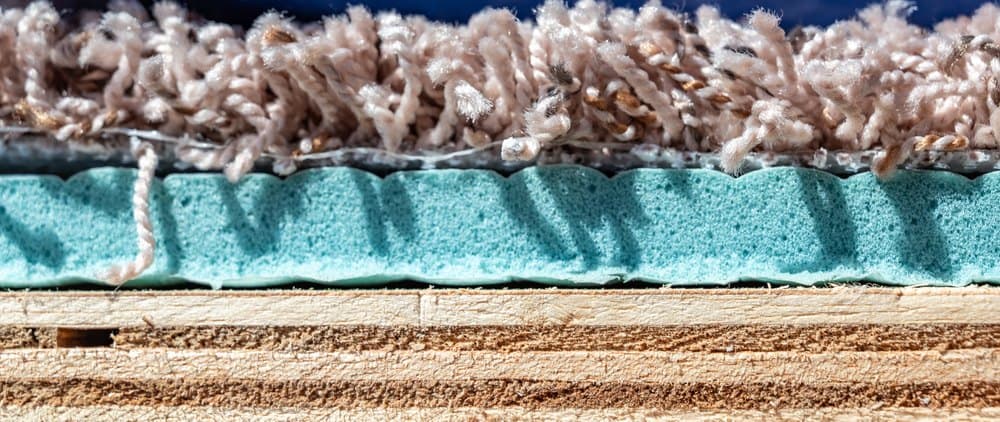
On a heavily soiled carpet that gap gets wide fast. One cleaner described a single bad job by saying the carpet drank 90 gallons of water. Picture 90 gallons soaking into fiber, foam padding, and the plywood underneath. No shop vac on a truck is pulling all of that back out. Whatever stays behind has to evaporate on its own, and that's the floor you're still tiptoeing around two days later.
What the damp floor is doing to your carpet
A carpet that stays wet isn't just an inconvenience. Given enough time, the moisture starts causing real problems under the surface where you can't see them.
The smell usually shows up first. Damp fibers and wet padding are exactly the conditions bacteria and mildew need, and once they get going you get that sour, musty odor that no amount of vacuuming fixes. People describe it as a wet-sock or boot-foot smell, and it means something started growing down in the padding while the carpet sat wet.
Left long enough, the water works on the carpet itself. When the backing stays saturated it can start to separate, or delaminate, and from there you can end up with bubbles and ripples, a carpet that needs re-stretching, or in the worst cases one that has to be pulled up and replaced. A cleaning is supposed to add years to your floor. Done with too much water, it can take them away.
Why low moisture dries faster
This is the whole reason we clean the way we do. Our method uses a small fraction of the water that a soaking extraction does, so the fibers get clean without turning the padding and subfloor into a sponge.
The difference is the part you notice most. Instead of blocking off a room for a day, you get your carpet back the same afternoon. There's nothing sitting in the padding to sour later, and nothing left saturating the backing. The carpet is clean and dry and back in service before you've finished dinner.
People ask about this too: even when the drying is quick, the dirty water we pull out never runs clear. Carpet holds onto microscopic grit, skin, and hair, so some color in the recovery water is normal and expected. Clear water was never the goal. A carpet that's genuinely clean and dry in a couple of hours is.
What this means for your Nolensville home
Nolensville has a lot of newer construction, and that matters here. Homes out in Bent Creek, Sherwood Green, and the subdivisions off Nolensville Road are often built on concrete slabs, and slab construction gives trapped moisture nowhere to drain. Water that soaks through the padding just sits against the concrete and takes its time coming back up. That's one reason an over-wet carpet in a newer Williamson County home can stay damp longer than you'd expect.
So if your last cleaning left you circling wet rooms for two days, that was a method problem, not something you have to accept as the price of clean carpet. The right approach gets the job done and gets out of your way.
Safe-Dry Carpet Cleaning of Nashville serves Nolensville and the surrounding communities, and you can see the full footprint on our Nashville area service page. If you're tired of waiting on floors to dry, call us at 615-560-8452 and we'll walk you through how our low-moisture process works.